
Case Study: Classic Car Suspension 3D Scanning
Project Overview
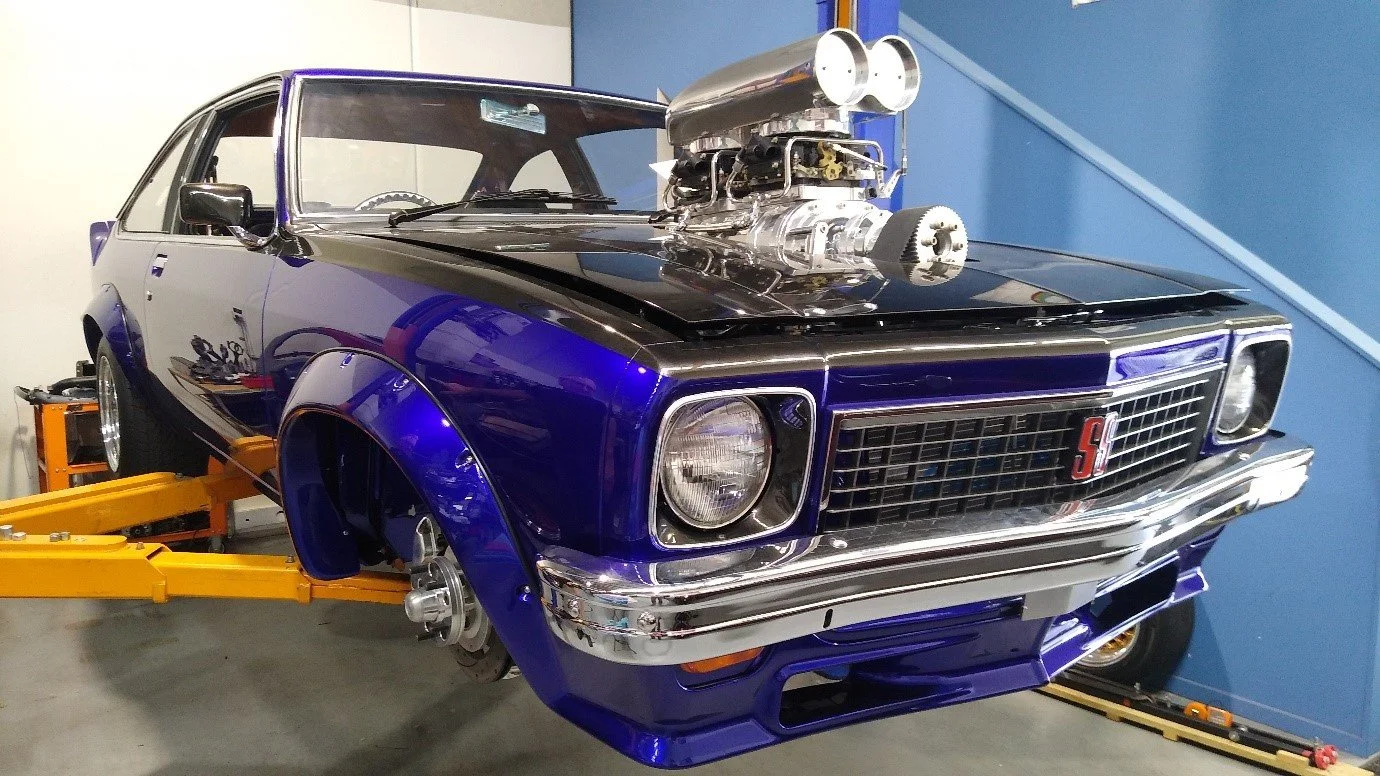
3D Hub was engaged to capture precise, certification-grade geometry of the suspension system from a highly customised Holden Torana LX SS. The vehicle featured mirror chrome components and complex custom fabrication, which made conventional measurement techniques slow, intrusive, and potentially inaccurate.
The objective was to create a complete, high fidelity digital model of the suspension system that could support certification through the Low Volume Vehicle Technical Association (LVVTA). The solution needed to capture accurate data without damaging the vehicle’s premium finishes or slowing the certification process.
This project demonstrates how 3D scanning in New Zealand can be used to accurately digitise complex automotive components for engineering analysis, reverse engineering, and vehicle certification.
The Challenge
Custom automotive builds often present measurement challenges that traditional tools struggle to address. In this case the key issues included:
Highly reflective chrome surfaces that typically disrupt optical scanning systems and often require heavy surface preparation.
Complex suspension geometry that needed to be captured in both free and compressed states to ensure accurate certification measurements.
Tight timelines to support the vehicle certification process.
A requirement for non-invasive measurement methods that would protect mirror finished components and custom fabrication.
Our Approach
We used advanced optical CMM 3D scanning technology to capture the suspension system with high accuracy in a workshop environment.
The portable scanning system allowed rapid setup and calibration while eliminating the need for adhesive targets on the vehicle. This significantly reduced preparation time and ensured the vehicle’s finish remained untouched.
To capture the full geometry of the system, the suspension was scanned in both free and compressed states. This ensured all mounting points, linkages, and structural relationships were accurately recorded.
Despite the mirror chrome finish, the scanning system produced clean, high-resolution data across all components without the need for scanning sprays, coatings, or disassembly.
Deliverables
The project delivered a complete digital dataset ready for engineering analysis and certification
documentation including:
High accuracy 3D scan dataset of the full suspension assembly
Dimensional inspection and measurement reporting for all suspension pickup points
Certification ready documentation prepared for LVVTA submission

Whatever your 3D Scanning or Reverse Engineering needs, we're here to help you.
Get in touch now to see how we can support your project.